What really puzzles me about prayer

A mentor of mine used to preach a sermon called, “One More Night With The Frogs”. I found out later that he wasn’t the only preacher to notice the strange case of Pharaoh’s placid acceptance of spending another night with the hopping hoards.

You see, the famous plagues in Egypt, brought on by Pharaoh’s refusal to let the Jews leave and worship Jehovah, had included an infestation of frogs so vile that the creatures flooded into houses, beds, kitchens and  food supplies. Life came to a miserable halt, and when Pharaoh’s magicians tried to impress Moses by creating more of the hoppers, they added to the misery – more frogs!

At that point, Pharaoh pleaded with Moses to pray to Jehovah and have Him remove the pests. Moses said, “I leave to you the honor of setting the time for me to pray… that you and your houses may be rid of the frogs…” (See Exodus 8:9).

“‘Tomorrow,’ Pharaoh said.”

Tomorrow? Tomorrow! Why on earth would he say tomorrow? Why not right away? That really puzzles me.

Like the conversation I had with a relative who had built water wells for impoverished villages in a third world country. He said his crew would dig the wells and pipe the water above ground to a small hand-operated pump so the whole village could come and get clean water. But he also said his crew would return a few years later and find the whole thing neglected and in disrepair. The villagers wouldn’t even perform simple maintenance tasks to keep the water flowing. That really puzzles me.

It reminds me of the reaction Jesus got in his own home town. Although he worked miracles and taught with great authority and power, the locals who grew up with him were offended at his succeses. Because of that, “He could not do any miracles there… And he was amazed at their lack of faith.” (Mark 6:1-6 NIV).

The Messiah, the Savior of the World lives in your home town… and gets a big yawn. That puzzles me.

So, what really puzzles me about prayer? The same thing.

If we really believe that prayer is worthwhile, that its vibrations reach the throne of God, that it changes people and circumstances, that it’s the most powerful force given to man on this earth… then why is it so hard to pray?

Why do most of us (preaching to myself here, also) neglect this astounding power? Why do we go days and days without any real praying? Why do so many other activities come first? Why, when in a group of believers, do we cringe when someone says, “Let’s pray about it right now.”?

Why is our appetite for prayer so weak, so easily appeased? I’m not sure. But I lament the fact… and it puzzles me.

In R.T. Kendall’s new book, Did You Think To Pray?, he quotes a survey done of British and American church leaders questioning them about how much time they spent in prayer daily. The average church leader admitted to praying only four or five minutes a day.

Does that puzzle you? Why is it so hard to devote the time to prayer that it deserves… that God deserves?

Got any answers? Any suggestions? Let me hear your comments…

Is the spirit of prayer caught or taught?

Prayer’s one of those activities we ought to be enthusiastic about, but few are.

Given the awesome potential of prayer, and the millions of testimonies about prayer’s effectiveness, wouldn’t it be worth it to find out how to motivate more authentic prayer?

How does this enthusiasm, this “spirit of prayer” come? Can it be taught or is it a natural grace given by God?PEWBroc09Cover

One interesting Bible example solves the issue and gives some guidance. Once when Jesus was praying, one of his disciples noticed something fascinating about his praying. Something (we don’t know exactly what) triggered the statement – “Lord, teach us to pray, just as John taught his disciples.”(Luke 11:1 NIV).

Here you have both – a disciple catching the spirit of prayer from Jesus, and the Master honoring his request for specific teaching on how to pray.

Most people can cry out in a crisis, but to pray with regular and intense success eludes most of us. That’s why prayer must be taught, at least if you want to pray effectively.

That’s why we host annual Prayer Enrichment Workshops here at Calhoun Church. Starting tomorrow (September 11, 2009) we’ll have nearly three days of prayer training from some of the most experienced teachers we could find.

Check out the following link and join us for this life-changing event: www.CalhounChurch.org

Intercession: how love prays

The Baroness Blixen, whose life the movie Out Of Africa dramatized, stood politely fidgeting in the receiving line waiting to greet the new Governor of Kenya.

His VIP reception, which featured all the area’s prominent socialites, dragged on with bland predictability. But what the Baroness was planning to do … well, nobody could’ve predicted that.

Changing times hadn’t been kind to her. She once owned a massive coffee plantation, including tribal lands of the Kikuyu people, but lost it during the financial bust following World War I.WhyGodWaitsCover

Certainly that loss stung her, but what really burned was the new owners’ attitude; they planned to throw the Kikuyu off their ancestral lands.

And this once-wealthy aristocrat had no money to buy back the land. She had no political clout and she found no sympathy when trying to work through government channels to help the Kikuyu.

Distraught, discredited and broke, she now saw the new Governor’s reception as a last chance, a shoestring tackle to save the people she loved. As the receiving line crept ahead slowly, she saw her opening.

The Baroness collapsed to her knees right in front of the Governor and began begging him to save the Kikuyu. Shocked onlookers tried to pull her away, but it was too late. She had ditched a lifetime of social correctness and “prayed” for the people who owned her heart.

She begged the Governor, “Please look into this matter! Please give me your word!” At that, the Governor’s wife stood. “You have my word,” she said.

Like a rose growing in a garbage dump, Baroness Blixen’s selfless love glistened in contrast to the empty social phoniness of her time. She really cared.

That quality – caring – is the golden heart of intercession; truly love on its knees.

-From Why God Waits For You To Pray – Chapter 13

Avoiding disappointment in prayer

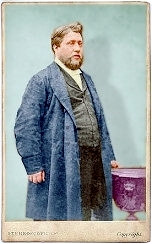
Just a decade or so before his death Charles H. Spurgeon, the famous 19th century London preacher, granted an interview about his long career. The interviewer asked if Spurgeon, well-known for his strong belief in prayer, had changed his mind about the power of intercession.Spurgeon

At that, Spurgeon told of a woman who came to his office distressed and needing advice. She had heard the preacher speak and his sermon so touched her that she thought he was aware of her problem – her husband had deserted her, leaving her penniless.

Spurgeon assured her that he had known nothing of her misfortune, but agreed to pray with her.  “There is nothing we can do but to kneel down and cry to the Lord for the immediate conversion of your husband.”

After the prayer he said, “Do not fret about the matter. I feel sure that your husband will come home, and that he will yet become connected to our church.”

Several months later the woman asked to see Spurgeon again, this time with a man whom she introduced as her husband. He had returned home as a converted Christian.

When Spurgeon and the woman compared notes, they found that the very same hour they had prayed together her husband, on board a ship at sea, had picked up a stray copy of one of Spurgeon’s sermons. When he read it, his heart melted. He cried out to God to save him, and made plans to rejoin his wife as soon as possible.

He and his wife both became members of Spurgeon’s church and never doubted the role of prayer in their reconciliation. As Spurgeon put it, “That woman does not doubt the power of prayer. All the infidels in the world could not shake her conviction that there is a God who answers prayer.”

Spurgeon also reminded the interviewer of the orphanage that the preacher’s ministry supported. The annual cost was 10,000 pounds, with only 1,400 pounds being guaranteed each year by endowment. The other 8,600 had to come in answer to prayer.

Speaking of the annual shortage of funds he said, “I do not know where I shall get it from day to day. I ask God for it, and he sends it. Mr. Muller, of Bristol, does the same on a far larger scale, and his experience is the same as mine.”

“The constant inflow of funds – of all the funds necessary to carry on these works – is not stimulated by advertisements, by begging letters, by canvassing… we ask God for the cash, and he sends it.”

After a lifetime of praying and seeing answers Spurgeon said, “It is not a matter of faith with me, but of knowledge and everyday experience. I am constantly witnessing the most unmistakable instances of answers to prayer. My whole life is made up of them.”

Did you catch that last phrase? It’s the key to avoiding disappointment in prayer. Make prayer a way of life, expecting answers, and you’ll see the larger picture of how God works when we ask.

“Devote yourselves to prayer, being watchful and thankful.” (Colossians 4:2 NIV)

(See Touching Incidents & Remarkable Answers to Prayer)

Will Prayer Always Be The Last Resort?

“One of those days Jesus went out to a mountainside to pray, and spent the night praying to God.” (Luke 6:12 NIV)

A Yellowstone Park Ranger herded his group of hikers toward the fire lookout tower. They almost didn’t make it alive.

Along the trail, the Ranger got so caught up in telling about Yellowstone’s unique wonders that he switched off the two-way radio on his belt; the squawking and crackling distracted from his lecture.

But as they came within sight of the fire tower, a breathless park employee ran toward the group: “Grizzly bear! We’ve been up in the tower, watching him stalk you … we tried to call you on the radio … what’s wrong with your radio?!”

The moral of the story? Things get dangerous when you stop listening, especially when you stop listening to God.

Have you ever done that? Ever gone off making decisions without listening, without asking God’s advice, and then regretted it later? I have.

Have you ever set your course (“Here’s my plan, God … now please bless it”) and then pulled your hair out trying to bail out a sinking project that didn’t have Divine backing? You and I both know you have … so have I.

What’s wrong with that approach? It’s pre-packaged disaster, that’s all. That’s why Jesus never conducted ministry that way. Notice how he kept contact with his Father, especially when fork-in-the-road decisions had to be made:

About the middle of Jesus’ second ministry year, he started getting hateful opposition to his work. Because he claimed to forgive sins, and because he healed people on the Sabbath, his enemies decided to have him killed.

On top of that, he had another dilemma. Since his days on earth were numbered, someone would have to inherit his ministry. He would leave earth and leave his work behind … in human hands!

The gospel would have to be preached by flawed, finite, corrupt people… people without much experience at being Jesus. Which onJesusFacees should he choose? And how would they ever get enough training and spiritual knowledge to do a decent job of replacing Christ!?

Packing these two hot issues (First, how to handle Satan’s plot to murder him and Second, whom should he choose to inherit this ministry) Jesus climbed the mountainside to pray.

“One of those days Jesus went out to a mountainside to pray, and spent the night praying to God.” (Luke 6:12 NIV)

Be careful. We’re standing on holy ground. We’re witnessing something of the Divine mystery.

The Only Begotten Son of God. The Alpha and Omega. The Holy One of Israel. The Lion of Judah. The Prince of Peace. The Word, who was with God and was God. He is praying. He asks for his Father’s help. They converse all night long.

The next morning Jesus chose the Twelve.

Do you realize that the leadership plan of the church itself emerged that night in prayer? Before he began to transfer any authority to his followers, Jesus spent the whole night praying. It all began with prayer.

Why? Did the Son of God need to pray? If not, what he did was a sham, an empty exercise in deception. If he didn’t truly pray and his Father didn’t truly listen and answer, then the Bible is a lie.

Yes, Jesus needed prayer. He needed it because of his kinship with us as a human being. Do we need prayer any less? The Father’s ordained way of working with human issues on this planet is by prayer.

Whatever the project and however small its beginning, it needs prayer first. I’m trying to learn to pray more at the beginning of things, rather than later after the wheels have come off. Why not just pray for the church (as Jesus did) rather than wrangling over church politics, programs, or the latest gimmicks to inspire church growth.

Is it because we pray so little that we have such meager results … and such shallow leadership?

-Excerpted from Chapter 5 of Why God Waits For You To Pray by Keith Roberts

How to tap the same power Jesus used

H.G. Bosch couldn’t believe it. How could a 400 foot tall iceberg keep bulling its way south right into the teeth of a stiff head wind? Against thundering surf?

The answer (warning: here comes a parable) lies beneath the surface; 90% of an iceberg’s mass is below the water line. According to a ship’s officer that Bosch queried, the icebergs he saw were in the Labrador Current – a massive ocean highway headed relentlessly south. As the current goes, so goes the iceberg.iceberg

Isn’t life just like that? (I told you there was a parable.) On the surface, some people seem so in control of themselves. They seem to have life all figured out … until tragedy arrives. Until the storm builds and life kicks them in the teeth.

Then they’re revealed for what they really were all along. Dead inside, like Jesus’ reference to the Pharisees, “whitewashed tombs”… sparkling outside, foul inside.

But others keep cruising into stiff head winds and crushing surf. Their values are a constant, refusing to change with the weather. They have character. They relentlessly track toward God, no matter how loudly the dogs of contemporary culture bark.

Jesus was such a man. He knew that anyone who marries the spirit of his times will soon be a widower. He knew he had to do his Father’s will even if it hurt, even if it killed him. Where did he find such courage? Watch as it unfolds.

Notice how Matthew describes this major event in Jesus’ prayer life:

Jesus had just started the last year of his earthly work. The religious professionals stirred a passionate opposition to him, and it was growing more hateful.

John the Baptist, Jesus’ cousin, was beheaded. His death sent aftershocks through Jesus’ camp. How would the Master deal with it?

He got into a boat and headed for a solitary place so he could pray (Matthew 14:13). But he couldn’t avoid the crowds. They followed him from all over Galilee, swarming by the thousands to intercept him as he landed on the other shore.

When he saw them he couldn’t refuse. Compassion impelled him to heal the sick. He even spent the whole day with them. By evening they needed food, so he took five loaves and two fish and fed all 5,000 people.

But then the situation grew more intense; the crowd wanted to take Jesus to Jerusalem and make him Jewish king by force of arms (John 6:15). After all, who’d make a better king? Who wouldn’t want a king who could raise fallen warriors back to life and feed whole armies with one ration? Why not attack the Romans in Jerusalem and make Jesus king by force?

With the tension at a snapping point, Jesus ordered his disciples into the boat and sent them back across the Sea of Galilee. He dismissed the crowds before anything could come of their heady plan.

Finally, after a whole day’s interruptions, Jesus headed for a quiet place to pray.

“After he had dismissed them, he went up a mountainside by himself to pray.” (Matthew 14:23 NIV)

In spite of the turmoil, the opposition and even his successes with the crowds, Jesus spent that whole night praying. And then he walked on the water.  Like the iceberg charging into the face of stiff winds and waves, Jesus’ power lay below the surface … in his prayer life.

(Excerpted from chapter 7 of  Why God Waits For You To Pray by Keith Roberts).

Praying missionary in China sees 60,000 baptisms in two years

James O. Fraser, a talented musician and engineer, had to learn mission work at the China Inland Mission the hard way—by trial and error.

He came to the Yunnan Province of China in 1910 intending to reach the almost forgotten Lisu tribal people.

Fraser was an accomplished student of languages. Before long he had mastered the Lisu’s difficult dialect, and then proceeded to translate the Scriptures into their language. His work was later labeled the “Fraser Script”.RevivalFraser

Yet despite having the Scriptures translated into their language, the Lisu didn’t come to Christ in large numbers.

But then Fraser discovered the power of prayer.

One biographer said, “To know the real Fraser one needed to hear him in prayer. Prayer was the very breath of life to him, and in prayer he seemed to slip from time into eternity.

“Frequently the mountainside would witness the piercing, importunate pleadings of this man who counted his prayer-time not by minutes but by hours.”

Fraser himself wrote: “How much of our prayer is of the quality we find in Hannah’s bitterness of soul, when she prayed unto the Lord? How many times have we ever ‘WEPT SORE’ before the Lord? We have prayed much perhaps, but our longings have not been deep compared with hers.”

Fraser’s Hannah-like prayers finally started to pay off.

By 1916 God’s Spirit began to work powerfully among the Lisu, which brought about sixty thousand baptisms within only two years!

David Smithers reports, “The Lisu church continued to grow and eventually became one of the largest tribal Christian bodies in the world.”

Did you notice that the written chronicles of revival and successful mission work always report that seasons of intense prayer had to come first?

Posted by Keith Roberts

Prayer wins several people a day for years

One of the most remarkable stories of prayer’s power happened during the life of John Hyde, an unlikely missionary to India in the late 1800’s.

He wasn’t considered the most talented missionary ever sent out. Partially deaf and tending to keep to himself, he found learning the complicated languages of India a stiff challenge.

But Hyde carried a heavy burden for the lost, which drove him to seek out better ways to win them, leading to his amazing emphasis on prayer.RevivalHyde

Richard Klein describes it this way: “In 1904, Indian Christians and western missionaries gathered for the first of an annual series of conventions at Sialkot in what is today Pakistan. To support this time of spiritual renewal, John Hyde and his friends formed the Punjab Prayer Union, setting aside half an hour each day to pray for revival…

“By 1908, John Hyde dared to pray what was to many at the convention an impossible request: that during the coming year in India one soul would be saved every day. Three hundred sixty five people converted, baptized, and publicly confessing Jesus as their Savior. Impossible — yet it happened. Before the next convention John Hyde had prayed more than 400 people into God’s kingdom, and when the prayer union gathered again, he doubled his goal to two souls a day. Eight hundred conversions were recorded that year, and still Hyde showed an unquenchable passion for lost souls.”

J. Pengwern Jones recalls, “He was always on his knees when I went to bed, and on his knees long before I was up in the morning, though I was up with the dawn. He would also light the lamp several times in the night, and feast on some passages of the Word, and then have a little talk with the Master. He sometimes remained on his knees the whole day.”

Near the end of his life, “Praying” John Hyde wrote about the powerfully effective praying the Lord had allowed to come into his life:

“On the day of prayer, God gave me a new experience. I seemed to be away above our conflict here in the Punjab and I saw God’s great battle in all India, and then away out beyond in China, Japan, and Africa. I saw how we had been thinking in narrow circles of our own countries and in our own denominations, and how God was now rapidly joining force to force and line to line, and all was beginning to be one great struggle. That, to me, means the great triumph of Christ. We must exercise the greatest care to be utterly obedient to Him who sees all the battlefield all the time. It is only He who can put each man in the place where his life can count for the most.”

The apostle Paul would agree: “Devote yourselves to prayer, being watchful and thankful. And pray for us, too, that God may open a door for our message, so that we may proclaim the mystery of Christ, for which I am in chains.” (Colossians 4:2 NIV).

(See this link for more.)

Understanding how Scripture impacts prayer

I used to worry when people quoted Scripture, seemingly out of context, to build a fire under their devotionals.

It seemed to me they were using Scripture the way positive thinkers use affirmations, to stoke their psychological state with a triumphalist attitude.

“No weapon that is formed against you shall prosper” seemed to have more to do with Isaiah’s prediction of Israel’s renaissance after her time of captivity than a personal promise to a televangelist about avoiding bankruptcy.

But then I rediscovered Hebrews 13:5 – “Keep your lives free from the love of money and be content with what you have, because God has said, ‘Never will I leave you; never will I forsake you.'” (NIV).

Think about it. The writer of Hebrews counsels his readers to take this ancient Scripture from its original context and encourage themselves with it, producing contentment. Without hesitation, he uses verses spoken not to his readers, but to Joshua as he was taking the reigns of leadership from Moses during the exodus.

Joshua will face trials, which could disrupt his own contentment, so the Lord tells him, “Never will I leave you, never will I forsake you.” (See Deuteronomy 31:6, 8 & Joshua 1:5).

And then the writer of Hebrews does it again in 13:6 – “So we say with confidence, The Lord is my helper; I will not be afraid. What can man do to me?'” (NIV).

He takes another Old Testament verse, pulls it partly from its context, and then applies it to his readers (see Psalm 118:6-7). And this context, taken from a song about victory in war, seems even further from daily life for the readers of Hebrews, who are struggling to hold on to faith in Christ amid persecution from fellow Jews.

When I realized this precedent – that I could take Scriptures written to people I don’t even know, in situations I’ll never experience, and apply them to daily struggle – I knew there was more power in prayer than I’d ever realized.

That’s why you find so many prayers in Scripture that are reused later by other people in other situations.

Example: when attacked by three armies, King Jehoshaphat prayed parts of King Solomon’s temple dedication prayer. Jehoshaphat used the prayer to “remind” God of His promises of protection to His covenant people (See 2 Chronicles 20:6-12 & 2 Chronicles 6:14:42).

You’ll find several other examples like this, where people used Scriptures written before their time to empower their own prayers.

Go to this link to find a 40 day plan to use Scripture to enhance your prayers.

Does prayer change God’s will?

A fellow blogger (thetractorcab.wordpress.com) asked me an interesting question recently – does prayer change God’s will?

Well, if prayer doesn’t change (at the least) God’s actions, then why pray? And If you pray, believing that prayer changes things, then what does it change?

I think I know why some people doubt that prayer changes God’s will. They believe His will cannot change because He can’t change. A perfect being doesn’t need to change.

But to say that prayer won’t change God’s will is to have a limited view of that will. What is God’s will? A monolithic structure? Is God tied to only one way of accomplishing His purposes?

In his wonderful, concise analysis called The Will of God, Leslie D. Weatherhead makes more sense on this issue than most writers. He says the will of God has many facets: God’s “intentional will”, His “circumstantial will” and His “ultimate will”.

God’s original intent (will) was that mankind live in a perfect paradise in complete harmony with Divinity. But Satanic evil, along with man’s sovereign choices, hijacked that will.

So now God works from His “circumstantial will” – His will as adjusted within a universe now corrupted by toxic evil.

As an example, Weatherhead mentions illness. Why do we fight with all our prayers and medical skill against illness, and then claim it was “God’s will” if the person dies? Were we fighting God’s will all along?

It was never “God’s will” that the world be swallowed up in sickness, death, suffering and evil, but now that it has been, His will works to reverse the curse.

Simple example: King Hezekiah became ill (not God’s intentional will from the beginning) and prayed. He was healed (God’s circumstantial will). If he had not prayed, he would not have been healed.(See 2 Kings 20).

God’s “will” waited on Hezekiah’s will. When he made his choice to pray, God’s will acted.

Yes, God’s “circumstantial will” – in which we now exist – can be changed by prayer… by prayers that change His working in particular situations where humans have a choice.