Author / Keith Roberts


Was Jesus A Myth?
“Nothing in Christianity is original.” That was Dan Brown’s claim in The Da Vinci Code.
But is it true? Is Jesus just a mythological figure with parts and pieces borrowed from ancient myths and foisted on an unsuspecting, gullible public? Many skeptics think so, but serious flaws infect their logic.
First, the ancient myths that the Jesus story supposedly imitates and the life of Jesus don’t match. Despite the misinformation circulated by skeptics on their websites, there aren’t any significant similarities between Jesus and the mythical gods of ancient lore.
One of the most common fake links between Jesus and ancient myths is the case of Horus, an ancient Egyptian deity. Supposedly, Horus was born on December 25th (Jesus probably wasn’t born in December; the Bible never dates his birth), born of a virgin, heralded by a star in the east, was visited as a child by three kings (again, the Bible never numbers the wise men and never calls them kings), had 12 disciples, was betrayed and crucified, resurrected from the dead, etc.
But when one actually studies the myth of Horus first-hand (and other ancient myths that are supposed to be the wellspring of the “Jesus myth”), they don’t even resemble the life of Jesus. As for Horus, the supposed connections are easily debunked – see this LINK for more.
These comparisons between Horus (along with other mythological figures) and Jesus arose in the 1800’s with theological schools of thought such as Form Criticism and the move to “de-mythologize” the Bible. Such theological thinking has been resurrected recently in pop culture as a way of diminishing the influence of Christ and the church in modern thought, while most serious scholarship has moved on.
If one goes back to the original, scholarly material on the ancient myths that are supposed to be the source of the gospel story, it’s easy to show that they have no resemblance to the Biblical account of Jesus’ life and work. For an excellent analysis of these false connections between Jesus and the myths, see this LINK.
Dr. William Lane Craig, a research professor of philosophy, also weighs in on the subject at this excellent LINK.
Second, Jesus was an actual historical figure while the mythological characters he’s often compared to didn’t exist. They were myths. Jesus was not. He is mentioned in several historical records outside the New Testament. You can find him discussed as an actual person by Josephus, the Jewish historian of the first century, as well as by Lucian, Mara bar-Serapion, Pliny, Seutonius and Tacitus. Even the Jewish Talmud mentions Jesus and admits to his historicity. See more details at this LINK.
For the skeptic who wishes to debunk Christianity by casting it as a myth, this road is a dead end. Nice try, but the facts don’t support it.
Why do you think this concept of Jesus as a myth appeals to so many people?
What Was Jesus Looking For?
Jesus avidly watched people, looking for something. In fact, he searched for it in the eyes of each person he met.
“When Jesus saw their faith, he said to the paralyzed man, ‘Son, your sins are forgiven.’” (Mark 2:5 NIV.)
Jesus “saw” faith. Certainly he saw it in their actions. But note how he scanned the situation and found faith glowing inside four men confident their buddy would be healed.
And he saw it again when he healed a woman with uncontrolled bleeding: “Jesus turned and saw her. ‘Take heart, daughter,’ he said, ‘your faith has healed you.’” (Matthew 9:22 NIV.)
Like a bloodhound following a scent, Jesus could track faith’s aroma in a person’s spirit. His people-watching skills would zero in, locki ng on to the strength or weakness in their faith life.
He often did that with his own disciples, sometimes calling them “you little-faith ones”. (Matthew 8:26 – literal Greek.)
In fact, Jesus said he’d still be scanning for faith when he returns: “However, when the Son of Man comes, will he find faith on the earth?” (Luke 18:8 NIV.)
Why so? What’s so important about faith? And what does it have to do with prayer?
“Have faith in God… Therefore I tell you, whatever you ask for in prayer, believe that you have received it, and it will be yours.” (Mark 11:22-24 NIV.)
Faith is the engine of prayer. Why? Because the key to authentic praying is relationship. Prayer is actually nothing more or less than expressing one’s relationship with God. And relationship isn’t possible without faith.
A marriage where each partner distrusts the other will fail. A relationship where the praying person distrusts God will also fail.
How have you managed to increase your faith in God? What has worked for you? Share it with us…
Do You Have To Be Religious To Pray?
 Have you noticed the hot debate recently about religion on social media? Here’s the gist: Religion is bad, so anyone who’s truly spiritual won’t bother with it.
I suppose we couldn’t avoid this attempt to pit religion and spirituality against each other, given the bad press religion suffers these days.
With so much violence done in the name of religion, the average person has little use for “organized religion”. Few bother to separate one religion from the other, lumping terrorists and unselfish servants of mankind in the same batch.
At the risk of defending my tribe too much (I’ve worked for religious groups for over 35 years), I’ll say that religion isn’t the problem… evil is!
One of Jesus’ own brothers, James, wrote: “Religion that God our Father accepts as pure and faultless is this: to look after orphans and widows in their distress and to keep oneself from being polluted by the world.” (James 1:27 NIV)
Did you notice that some religion is “pure and faultless”? Which means that some religion is “impure” and full of “fault”.
So, how can a believer merge true spirituality with healthy religion?
It helps to keep this thought: True spirituality is the inward relationship with God through Christ. And healthy religion is participation in the public outworking of that inner relationship in worship and service to others.
One can participate in both at the same time, building a balanced prayer life and an outward focus on serving people.
Religion without true spirituality is dangerous; Spirituality without healthy religion becomes stagnant narcissism.
Do you find it easier to pray when you’re alone, or when you’re praying with a group? Share your thoughts with us…
Is Prayer An Illusion?
Is prayer an illusion? Some people think so. Here’s what they say to try and prove it:
- If you believers pray and something happens that you’ve asked for, you assume it’s God. But you can’t know that for sure. It might simply be coincidence.
- But, if you pray and don’t get what you asked for, you claim it was “God’s will” not to answer.

- So, whether you get what you asked for or not, you claim it’s all God’s will. If it’s all God’s will, then his will gets done whether you pray or not – so why pray?

Sounds logical, doesn’t it. But the problem is this – human logic can’t determine whether or not the experience of prayer is authentic.
I know that drives logical-scientific thinkers crazy. It seems as though I’m dodging the issue. But actually that is the issue.
One will never prove the authenticity of prayer by empirical evidence. The five senses aren’t capable of testing the reality of prayer.
Those who believe in prayer will bring up answers to prayer to prove their point, and those who don’t believe will point out failed prayers to prove theirs. It all ends in a stalemate.
This explains the gap between atheists and believers. The five senses are the bread & butter of scientific, secular-humanistic thinking, but those same fives senses can’t experience spiritual reality.
For example, there are frequencies that dogs can hear but humans can’t. Insects can see certain light waves that humans can’t. A man born blind can’t fully experience the sunset even though you describe it passionately.
Just as you can’t receive TV broadcasts on a chain saw, or hear a radio station on a crescent wrench, true spiritual reality can’t be experienced with the five senses.
To experience the spiritual reality of prayer, one must switch frequencies… from empirical thinking to faith. Faith is the other frequency by which humans know things. We know things pertaining to life on this planet by the five senses, but we know spiritual things by revelation. And revelation comes in relationship.
And a relationship with God begins in prayer.
“Take it from me: Unless a person is born from above, it’s not possible to see what I’m pointing to – to God’s kingdom.” -Jesus (John 3:3 MSG)
Do you think there’s a difference between “religious” prayers based on the five senses, and “born again” prayers grounded in spiritual experience?
Prayer? Has It Come To That?
Cruise the internet a while and you’ll find a whole tribe of skeptics mocking prayer. As one site put it, “prayer and anything like it is a waste of time and energy…. I don’t really see prayer ever being a constructive activity except for maybe someone who is using it as a crutch.”

Help!
Do you think they’re right? Prayer looks so weak and harmless to most people. It seems like only a last, desperate resort for people who’ve run out of options.
I remember hearing of a contentious church committee trying to make a crucial decision. Out of frustration, one attendee blurted out, “Maybe we should just pray about it…”
Another in the meeting chimed, “Has it come to that!?”
Prayer seems weak. Maybe that’s why most people (including many Christians) see prayer as a last resort, a self-inflicted optimism that can’t possibly have any real influence on this chaotic cosmos.
But sometimes prayer will surprise you. It’ll trick you into thinking it’s weak, only to amaze you by its jaw-dropping power…
- When the Assyrians invaded the territory of ancient Jerusalem, they sent King Hezekiah a threatening letter saying: “Or are you going to tell me, ‘We rely on God’? (2 Kings 18:22 MSG). Prayer seemed weak to the Assyrian army but when Hezekiah prayed, “that that very night an angel of God came and massacred a hundred and eighty-five thousand Assyrians. When the people of Jerusalem got up next morning, there it was – a whole camp of corpses!” (2 Kings 19:35 MSG.) The world’s most dreaded superpower went home in disgrace because of a “weak” thing called prayer.
- And then there was King Jehoshaphat. Three barbaric armies marched up to destroy his weak little kingdom. No onlookers would’ve bet against the Moabites, Ammonites and Meunites. They looked invincible and Jehoshaphat had retreated into his prayer time… along with his people. But when the post-prayer dust settled, Jehoshaphat’s army hadn’t even drawn a sword and the attackers wound up destroying themselves (2 Chronicles 20).
- Even Jesus resorted to this weak-looking power during his darkest time. While Judas was busy betraying his Rabbi and Peter lay sleeping while gripping his sword, Jesus prayed in Gethsemane. Satan must’ve thought Jesus had lost his way when he resorted to mere praying in the face of arrest, torture, crucifixion and hell itself. But the demonic world was ignorant of how prayer was about to shake the universe. Jesus “offered up prayers and petitions with loud cries and tears to the one who could save him from death (or out of death), and he was heard…” (Hebrews 5:7). Amazingly, the resurrection of Jesus sprang out of this weak thing called prayer.
“But God chose the foolish things of the world shame the wise; God chose the weak things of the world to shame the strong.” (1 Corinthians 1:27 NIV.)
Have you ever been surprised by the power of prayer? Share it with us…
Prayer Changes Nothing!… Really?
“Prayer changes nothing!”
Often attributed to Dr. Donald Grey Barnhouse, famous author and Bible expositor, that quote puts into words what many Chr istians seem to think.
In decades of teaching seminars & workshops on prayer, I’ve heard it often. “Prayer really doesn’t change circumstances, it just changes us.”
The problem is… that’s wrong. It borders on heresy, denying the personal working of God in this world today.
It’s wrong for these basic reasons:
The Bible contradicts it. Even though true prayer certainly changes the person doing the praying, that isn’t the whole story. Here’s a sample of what the Bible says about answered prayer:
- Prayer gave Isaac twin sons even though his wife was barren – Genesis 25:21.
- Prayer kept Esau from killing Jacob and caused the two to reconcile – Genesis 32:11 & 33:4.
- Prayer freed the children of Israel from Egyptian bondage – Exodus 2:23-25.
- Prayer saved the nation of Israel from God’s judgment and preserved their destiny – Deuteronomy 9:18-20.
- Prayer spared Israel again and again during the time of Judges, until they asked for a king instead – 1 Samuel 12:6-23.
- Prayer gave King Solomon his unique wisdom – 1 Kings 3:9-12.
- Prayer saved King Jehoshaphat & his people from invasion by three armies – 2 Chronicles 20:1-30.
- Prayer released Peter from death row – Acts 12:5-11.
- Prayer led to Paul’s conversion & forgiveness – Acts 7:59-60 & 9:1-6
- Prayer brought Jesus back from the dead – Hebrews 5:7.
And that’s just a small sampling. In Dr. Herbert Lockyer’s book, All The Prayers Of The Bible, the foreword says Scripture records 650 definite prayers, of which there are 450 specific answers recorded.
Besides that, faith contradicts it.
This doctrine – that “prayer changes nothing” – directly contradicts what the Bible says about faith. It’s a doctrine that negates faith. It tries to satisfy the natural man’s aversion to God’s supernatural working.
If God doesn’t answer prayer today, then one doesn’t have to worry about why specific prayers didn’t get answered. If prayer merely changes my attitude, then I don’t expect God to work in specific ways that can be seen and measured. If He doesn’t work in ways that can be seen today, then I’m not obligated to search out His ways.
Put another way – “Don’t expect anything and you won’t get disappointed.”
So, prayer does change things. It changes everything, including people, attitudes, circumstances, illness, the weather… if God can change it, then prayer can influence it.
As the Bible puts it – “You do not have because you do not ask God.” -James 4:2 NIV
I bet most of you reading this post have experienced at least one remarkable answer to prayer. Why not share it with us in the comments?
How Did Jesus Get So Spiritual? Part 2
If I can understand how Jesus got so spiritual, maybe I can duplicate it… at least I can imitate his spiritual habits, therefore growing into something like his spirituality.
So what habits did he practice in order to grow spiritually? We found out in the last blog that “Jesus grew in wisdom and stature, and in favor with God and men.” (Luke 2:52 NIV). So his powerful spiritual life grew out of his habits rather than coming upon him instantly.
And last time we also looked at some of these spirit-building habits:
- study of the word
- service to other people
- consistent prayer
Also, some of the comments on that first blog brought out two other productive habits of Jesus’ spiritual life: he obeyed his parents and he persisted without giving up in the face of persecution.
Here are some of Jesus’ other habits that grew him spiritually:
- Fasting. Jesus both taught and practiced this often-neglected spiritual discipline. He fasted 40 days in the wilderness after the Spirit led him there to be tested by Satan (Luke 4:1-13). He withstood this fiery trial because of his habit of fasting and prayer. He didn’t even begin his public ministry until this trial had been won by fasting. And he taught his disciples, “When you fast (not if) do not look somber as the hypocrites do… But when you fast (not if) put oil on your head and wash your face, so that it will not be obvious to men that you are fasting…” -Matthew 6:16-18 NIV (emphasis added).
- Worship. With Jesus, worship wasn’t reserved for formal occasions. Once when 72 of his disciples returned from ministering in the Spirit’s power, Jesus “full of joy through the Holy Spirit, said, ‘I praise you, Father, Lord of heaven and earth, because you have hidden these things from the wise and revealed them to little children.'” -Luke 10:21 NIV. And in his confrontation with Satan, Jesus said, “For it is written: ‘Worship the Lord your God, and serve him only.'” -Matthew 4:10 NIV.
- Surrender. One of the highest-level spiritual habits Jesus practiced, and one of the hardest we attempt, is surrender. Amazingly, Jesus once said, “I tell you the truth, the Son can do nothing by himself; he can do only what he sees his Father doing, because whatever the Father does the Son also does.” -John 5:19 NIV. If Jesus couldn’t accomplish anything without his Father, then I must learn the same sort of surrender to have any chance at growing spiritually.
Jesus also spoke about this type of surrender by saying, “Those who love the life they have now will lose it. But those who are willing to give up their life in this world will keep it. They will have eternal life. Whoever serves me must follow me. My servants must be with me everywhere I am. My Father will give honor to anyone who serves me.” -John 12:25-26 ERV.
Can you think of other spiritual disciplines that Jesus practiced? Give us your insights…
How Did Jesus Get So Spiritual? Part 1
Did you ever wonder how Jesus became the spiritual man we read about in the Bible? How did this carpenter from Nazareth in the Middle East grow to become the spiritual leader who changed the whole world? Did it just happen, like Superman launching out of the phone booth dressed and ready for action? Or did it happen more gradually, like an oak tree growing slowly from an acorn?
Certainly, as the Son of God, he already had the Divine Spirit living in him; he was God in flesh (John 1:1-14). But the Bible indicates that Jesus had to grow into his destiny as the iconic spiritual man walking in the flesh of Adam – “And Jesus grew in wisdom and stature, and in favor with God and men.” (Luke 2:52 NIV).
So, how did this growth process take place? What did Jesus himself do to grow into his full spiritual stature?
Professor Dallas Willard wrote a thought-provoking book on that idea several years ago called, “The Spirit of The Disciplines: Understanding How God Changes Lives”. In that book, he mentioned that Jesus practiced several spiritual disciplines.
His list is too long to duplicate right now, but here are some basic disciplines that Jesus practiced to grow as a spiritual man:
1. Study. Jesus lived in a rich Jewish tradition of respect for the word. It’s clear as you read his life story in the Gospels that he knew the Bible – the Law, Prophets and Psalms – better than anyone else. He once said, “Do not think that I have come to abolish the Law or the Prophets; I have not come to abolish them but to fulfill them.” (Matthew 5:17 NIV) And when tempted by Satan in the wilderness for 40 days, Jesus used the Scriptures as the “Sword of the Spirit”, demolishing all of the evil one’s arguments by saying, “it is written”. (Luke 4:1-13)
2. Service. Jesus’ example stood miles above his religious detractors because he put into practice the things he learned from Scripture. Once when his disciples entered the room to observe the Passover, Jesus noticed that no one volunteered to wash everyone’s feet (a normal, customary thing to do when entering a meal). So he “got up from the meal, took off his outer clothing, and wrapped a towel around his waist. After that, he poured water into a basin and began to wash his disciples’ feet..” (John 13:4-5 NIV)
This horrified Peter who, at first, refused to allow Jesus to wash his feet. How could the Messiah stoop so low as to wash the feet of his own disciples? Jesus did it to serve, to leave an example for his disciples, and to show that he was submissive to his Father’s word (See Isaiah 42:1-4 where the Messiah is predicted to be a gentle servant.)
3. Prayer. “Very early in the morning, while it was still dark, Jesus got up, left the house and went off to a solitary place, where he prayed.” (Mark 1:35 NIV). This kind of commitment to prayer weaves itself in and out of the Gospel accounts. Jesus prayed often and he prayed for hours at a time, even sometimes praying all night.
In my book, Why God Waits For You To Pray, you’ll find an appendix that chronicles 17 major prayer events in Jesus’ life, and another one listing the 15 major “seminars’ Jesus taught on prayer. Jesus believed in prayer. And he practiced it with an intensity and commitment that awes us and pulls us forward to follow his example.
Can you think of any other spiritual disciplines that Jesus practiced? Share your insights with us…
Why would a church pray 12 hours a day?
Do you believe there’s a church that has taken on the challenge to pray for 12 hours each day, 7 days a week?
According to the Arkansas Democrat Gazette newspaper (Sunday March 13th) the Bella Vista Baptist Church has a ministry called “The Lighthouse of Prayer” – a prayer room staffed 12 hours per day, 7 days a week (6:00 AM till 6:00 PM).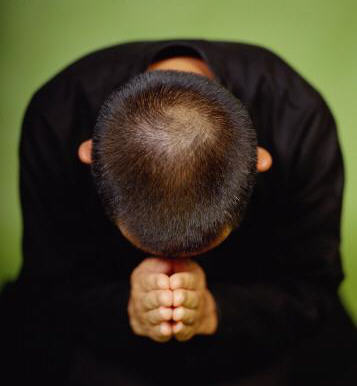
This means that coordinators Kara Gosnell and Barbara Erskine must fill 84 slots per week in the prayer room, as volunteers pray for the requests that pour in from emails and the church office itself.
Remarkably, this ministry has been going on for the past 21 years.
And the work doesn’t end when the prayers are over. “PrayerGrams” (encouraging cards with Scripture quotes) are sent to each one prayed for, when possible.
One young mom, whose infant son was prayed for while having his third heart surgery, commented about the prayer team, “It was very comforting to me… and God has answered many prayers for him.”
Wonder what would happen if most churches would do the same?
Do you know of any other remarkable prayer ministries? Give us their ideas in your comments…
 Why God Waits for You to Pray